Monday, September 18, 2006

Pope's Speech

The Pope has apologised, lets leave it at that.
I dont find it inflammatory at all, what do you expect from a Christian? Its stated in the Quran, that the Christian, jews and the non believers will not rest until you the Muslim follow their way.
For us to over react, make demonstration, burn Christian houses and kill innocent people, that just reinforce what they believe.


Pope must apologise, says Abdullah

(Bernama) -- Pope Benedict XVI must apologise and withdraw his recent remarks linking Islam and violence that have offended Muslims all over the world, Datuk Seri Abdullah Ahmad Badawi said.

"The Pope must not take lightly the spread of outrage that has been created. The Vatican must now take full responsibility over the matter and carry out the necessary steps to rectify the mistake," the prime minister told Malaysian journalists covering the 14th Summit of the Non-Aligned Movement (NAM) here, Friday.

Abdullah, who is chairman of the 57-nation Organisation of the Islamic Conference (OIC), said it was regrettable that the remarks showed insensitivity to Muslim feelings and would surely hinder the fostering of good relations between Islam and Christianity.

Benedict provoked the outcry on Tuesday when he quoted criticism of Islam and Prophet Muhammad by 14th century Byzantine Christian Emperor Manuel II Palaeologus in a theological lecture in Germany.

"It is unfortunate that such an eminent figure like the Pope has not shown leadership in promoting good relations between religions.

"Instead, his statement has had the effect of sowing more seeds of discord and will not be conducive for dialogue among religions," Abdullah said.

He said that judging from the reactions of various quarters around the world, obviously, the Pope's words could lead to further tension between religions.

Meanwhile, Foreign Minister Datuk Seri Syed Hamid Albar urged Muslims to be patient and not to get too emotional.

However, he said that the Muslim world should condemn the statement so that it was not repeated.

He said such statements were not good for world security and stability besides hampering efforts to avoid cultural and religious clashes.

Pope's speech at University of Regensburg (full prepared text)

Sep. 14 (CWNews.com) - Editor's note: The following is the prepared text from which Pope Benedict XVI (bio - news) spoke as he addressed an academic audience at the Unviersity of Regensburg on September 12. As he actually delivered it, the speech differed slightly. Because the speech has aroused an unusual amount of debate-- particularly regarding the Pope's references to Islam and to religious violence-- CWN strongly recommends reading the entire text.

Distinguished Ladies and Gentlemen,

It is a moving experience for me to stand and give a lecture at this university podium once again. I think back to those years when, after a pleasant period at the Freisinger Hochschule, I began teaching at the University of Bonn. This was in 1959, in the days of the old university made up of ordinary professors. The various chairs had neither assistants nor secretaries, but in recompense there was much direct contact with students and in particular among the professors themselves.

We would meet before and after lessons in the rooms of the teaching staff. There was a lively exchange with historians, philosophers, philologists and, naturally, between the two theological faculties. Once a semester there was a dies academicus, when professors from every faculty appeared before the students of the entire university, making possible a genuine experience of universitas: the reality that despite our specializations which at times make it difficult to communicate with each other, we made up a whole, working in everything on the basis of a single rationality with its various aspects and sharing responsibility for the right use of reason-- this reality became a lived experience.

The university was also very proud of its two theological faculties. It was clear that, by inquiring about the reasonableness of faith, they too carried out a work which is necessarily part of the whole of the universitas scientiarum , even if not everyone could share the faith which theologians seek to correlate with reason as a whole. This profound sense of coherence within the universe of reason was not troubled, even when it was once reported that a colleague had said there was something odd about our university: it had two faculties devoted to something that did not exist: God. That even in the face of such radical skepticism it is still necessary and reasonable to raise the question of God through the use of reason, and to do so in the context of the tradition of the Christian faith: this, within the university as a whole, was accepted without question.

I was reminded of all this recently, when I read the edition by Professor Theodore Khoury (Münster) of part of the dialogue carried on-- perhaps in 1391 in the winter barracks near Ankara-- by the erudite Byzantine emperor Manuel II Paleologus and an educated Persian on the subject of Christianity and Islam, and the truth of both. It was probably the emperor himself who set down this dialogue, during the siege of Constantinople between 1394 and 1402; and this would explain why his arguments are given in greater detail than the responses of the learned Persian.

The dialogue ranges widely over the structures of faith contained in the Bible and in the Qur'an, and deals especially with the image of God and of man, while necessarily returning repeatedly to the relationship of the three Laws: the Old Testament, the New Testament, and the Qur'an. In this lecture I would like to discuss only one point-- itself rather marginal to the dialogue itself-- which, in the context of the issue of faith and reason, I found interesting and which can serve as the starting-point for my reflections on this issue.

In the seventh conversation edited by Professor Khoury, the emperor touches on the theme of the jihad (holy war). The emperor must have known that surah 2, 256 reads: There is no compulsion in religion. It is one of the suras of the early period, when Mohammed was still powerless and under threat.

But naturally the emperor also knew the instructions, developed later and recorded in the Qur'an, concerning holy war. Without descending to details, such as the difference in treatment accorded to those who have the "Book" and the "infidels," he turns to his interlocutor somewhat brusquely with the central question on the relationship between religion and violence in general, in these words:

Show me just what Mohammed brought that was new, and there you will find things only evil and inhuman, such as his command to spread by the sword the faith he preached.

The emperor goes on to explain in detail the reasons why spreading the faith through violence is something unreasonable. Violence is incompatible with the nature of God and the nature of the soul.

God is not pleased by blood, and not acting reasonably is contrary to God's nature. Faith is born of the soul, not the body. Whoever would lead someone to faith needs the ability to speak well and to reason properly, without violence and threats... To convince a reasonable soul, one does not need a strong arm, or weapons of any kind, or any other means of threatening a person with death....

The decisive statement in this argument against violent conversion is this: not to act in accordance with reason is contrary to God's nature. The editor, Theodore Khoury, observes: "For the emperor, as a Byzantine shaped by Greek philosophy, this statement is self-evident. But for Muslim teaching, God is absolutely transcendent. His will is not bound up with any of our categories, even that of rationality." Here Khoury quotes a work of the noted French Islamist R. Arnaldez, who points out that Ibn Hazn went so far as to state that God is not bound even by his own word, and that nothing would oblige him to reveal the truth to us. Were it God's will, we would even have to practice idolatry.

As far as understanding of God and thus the concrete practice of religion is concerned, we find ourselves faced with a dilemma which nowadays challenges us directly. Is the conviction that acting unreasonably contradicts God's nature merely a Greek idea, or is it always and intrinsically true? I believe that here we can see the profound harmony between what is Greek in the best sense of the word and the biblical understanding of faith in God. Modifying the first verse of the Book of Genesis, John began the prologue of his Gospel with the words: In the beginning was the ???o?. This is the very word used by the emperor: God acts with logos.

Logos means both reason and word-- a reason which is creative and capable of self-communication, precisely as reason. John thus spoke the final word on the biblical concept of God, and in this word all the often toilsome and tortuous threads of biblical faith find their culmination and synthesis. In the beginning was the logos, and the logos is God, says the Evangelist.

The encounter between the Biblical message and Greek thought did not happen by chance. The vision of Saint Paul, who saw the roads to Asia barred and in a dream saw a Macedonian man plead with him: Come over to Macedonia and help us! (cf. Acts 16:6-10)-- this vision can be interpreted as a distillation of the intrinsic necessity of a rapprochement between Biblical faith and Greek inquiry.

In point of fact, this rapprochement had been going on for some time. The mysterious name of God, revealed from the burning bush, a name which separates this God from all other divinities with their many names and declares simply that he is, is already presents a challenge to the notion of myth, to which Socrates's attempt to vanquish and transcend myth stands in close analogy. Within the Old Testament, the process which started at the burning bush came to new maturity at the time of the Exile, when the God of Israel, an Israel now deprived of its land and worship, was proclaimed as the God of heaven and earth and described in a simple formula which echoes the words uttered at the burning bush: I am.

This new understanding of God is accompanied by a kind of enlightenment, which finds stark expression in the mockery of gods who are merely the work of human hands (cf. Ps 115). Thus, despite the bitter conflict with those Hellenistic rulers who sought to accommodate it forcibly to the customs and idolatrous cult of the Greeks, biblical faith, in the Hellenistic period, encountered the best of Greek thought at a deep level, resulting in a mutual enrichment evident especially in the later wisdom literature.

Today we know that the Greek translation of the Old Testament produced at Alexandria-- the Septuagint-- is more than a simple (and in that sense perhaps less than satisfactory) translation of the Hebrew text: it is an independent textual witness and a distinct and important step in the history of revelation, one which brought about this encounter in a way that was decisive for the birth and spread of Christianity. A profound encounter of faith and reason is taking place here, an encounter between genuine enlightenment and religion. From the very heart of Christian faith and, at the same time, the heart of Greek thought now joined to faith, Manuel II was able to say: Not to act "with logos" is contrary to God's nature.

In all honesty, one must observe that in the late Middle Ages we find trends in theology which would sunder this synthesis between the Greek spirit and the Christian spirit. In contrast with the so-called intellectualism of Augustine and Thomas, there arose with Duns Scotus a voluntarism which ultimately led to the claim that we can only know God's voluntas ordinata. Beyond this is the realm of God's freedom, in virtue of which he could have done the opposite of everything he has actually done. This gives rise to positions which clearly approach those of Ibn Hazn and might even lead to the image of a capricious God, who is not even bound to truth and goodness. God's transcendence and otherness are so exalted that our reason, our sense of the true and good, are no longer an authentic mirror of God, whose deepest possibilities remain eternally unattainable and hidden behind his actual decisions.

As opposed to this, the faith of the Church has always insisted that between God and us, between his eternal Creator Spirit and our created reason there exists a real analogy, in which unlikeness remains infinitely greater than likeness, yet not to the point of abolishing analogy and its language (cf. Lateran IV). God does not become more divine when we push him away from us in a sheer, impenetrable voluntarism; rather, the truly divine God is the God who has revealed himself as logos and, as logos, has acted and continues to act lovingly on our behalf. Certainly, love transcends knowledge and is thereby capable of perceiving more than thought alone (cf. Eph 3:19); nonetheless it continues to be love of the God who is logos. Consequently, Christian worship is worship in harmony with the eternal Word and with our reason (cf. Rom 12:1).

This inner rapprochement between Biblical faith and Greek philosophical inquiry was an event of decisive importance not only from the standpoint of the history of religions, but also from that of world history-– it is an event which concerns us even today. Given this convergence, it is not surprising that Christianity, despite its origins and some significant developments in the East, finally took on its historically decisive character in Europe. We can also express this the other way around: this convergence, with the subsequent addition of the Roman heritage, created Europe and remains the foundation of what can rightly be called Europe.

The thesis that the critically purified Greek heritage forms an integral part of Christian faith has been countered by the call for a dehellenization of Christianity-– a call which has more and more dominated theological discussions since the beginning of the modern age. Viewed more closely, three stages can be observed in the program of dehellenization: although interconnected, they are clearly distinct from one another in their motivations and objectives.

Dehellenization first emerges in connection with the fundamental postulates of the Reformation in the 16th century. Looking at the tradition of scholastic theology, the Reformers thought they were confronted with a faith system totally conditioned by philosophy, that is to say an articulation of the faith based on an alien system of thought. As a result, faith no longer appeared as a living historical Word but as one element of an overarching philosophical system. The principle of sola scriptura, on the other hand, sought faith in its pure, primordial form, as originally found in the biblical Word. Metaphysics appeared as a premise derived from another source, from which faith had to be liberated in order to become once more fully itself. When Kant stated that he needed to set thinking aside in order to make room for faith, he carried this program forward with a radicalism that the Reformers could never have foreseen. He thus anchored faith exclusively in practical reason, denying it access to reality as a whole.

The liberal theology of the 19th and 20th centuries ushered in a second stage in the process of dehellenization, with Adolf von Harnack as its outstanding representative. When I was a student, and in the early years of my teaching, this program was highly influential in Catholic theology too. It took as its point of departure Pascal's distinction between the God of the philosophers and the God of Abraham, Isaac, and Jacob.

In my inaugural lecture at Bonn in 1959, I tried to address the issue. I will not repeat here what I said on that occasion, but I would like to describe at least briefly what was new about this second stage of dehellenization. Harnack's central idea was to return simply to the man Jesus and to his simple message, underneath the accretions of theology and indeed of hellenization: this simple message was seen as the culmination of the religious development of humanity. Jesus was said to have put an end to worship in favor of morality. In the end he was presented as the father of a humanitarian moral message. The fundamental goal was to bring Christianity back into harmony with modern reason, liberating it, that is to say, from seemingly philosophical and theological elements, such as faith in Christ's divinity and the triune God.

In this sense, historical-critical exegesis of the New Testament restored to theology its place within the university: theology, for Harnack, is something essentially historical and therefore strictly scientific. What it is able to say critically about Jesus is, so to speak, an expression of practical reason and consequently it can take its rightful place within the university. Behind this thinking lies the modern self-limitation of reason, classically expressed in Kant's "Critiques", but in the meantime further radicalized by the impact of the natural sciences. This modern concept of reason is based, to put it briefly, on a synthesis between Platonism (Cartesianism) and empiricism, a synthesis confirmed by the success of technology. On the one hand it presupposes the mathematical structure of matter, its intrinsic rationality, which makes it possible to understand how matter works and use it efficiently: this basic premise is, so to speak, the Platonic element in the modern understanding of nature. On the other hand, there is nature's capacity to be exploited for our purposes, and here only the possibility of verification or falsification through experimentation can yield ultimate certainty. The weight between the two poles can, depending on the circumstances, shift from one side to the other. As strongly positivistic a thinker as J. Monod has declared himself a convinced Platonist/Cartesian.

This gives rise to two principles which are crucial for the issue we have raised. First, only the kind of certainty resulting from the interplay of mathematical and empirical elements can be considered scientific. Anything that would claim to be science must be measured against this criterion. Hence the human sciences, such as history, psychology, sociology, and philosophy, attempt to conform themselves to this canon of scientificity. A second point, which is important for our reflections, is that by its very nature this method excludes the question of God, making it appear an unscientific or pre-scientific question. Consequently, we are faced with a reduction of the radius of science and reason, one which needs to be questioned.

We shall return to this problem later. In the meantime, it must be observed that from this standpoint any attempt to maintain theology's claim to be "scientific" would end up reducing Christianity to a mere fragment of its former self. But we must say more: it is man himself who ends up being reduced, for the specifically human questions about our origin and destiny, the questions raised by religion and ethics, then have no place within the purview of collective reason as defined by "science" and must thus be relegated to the realm of the subjective. The subject then decides, on the basis of his experiences, what he considers tenable in matters of religion, and the subjective "conscience" becomes the sole arbiter of what is ethical. In this way, though, ethics and religion lose their power to create a community and become a completely personal matter.

This is a dangerous state of affairs for humanity, as we see from the disturbing pathologies of religion and reason which necessarily erupt when reason is so reduced that questions of religion and ethics no longer concern it. Attempts to construct an ethic from the rules of evolution or from psychology and sociology, end up being simply inadequate.

Before I draw the conclusions to which all this has been leading, I must briefly refer to the third stage of dehellenization, which is now in progress. In the light of our experience with cultural pluralism, it is often said nowadays that the synthesis with Hellenism achieved in the early Church was a preliminary inculturation which ought not to be binding on other cultures. The latter are said to have the right to return to the simple message of the New Testament prior to that inculturation, in order to inculturate it anew in their own particular milieux. This thesis is not only false; it is coarse and lacking in precision. The New Testament was written in Greek and bears the imprint of the Greek spirit, which had already come to maturity as the Old Testament developed. True, there are elements in the evolution of the early Church which do not have to be integrated into all cultures. Nonetheless, the fundamental decisions made about the relationship between faith and the use of human reason are part of the faith itself; they are developments consonant with the nature of faith itself.

And so I come to my conclusion. This attempt, painted with broad strokes, at a critique of modern reason from within has nothing to do with putting the clock back to the time before the Enlightenment and rejecting the insights of the modern age. The positive aspects of modernity are to be acknowledged unreservedly: we are all grateful for the marvelous possibilities that it has opened up for mankind and for the progress in humanity that has been granted to us. The scientific ethos, moreover, is the will to be obedient to the truth, and, as such, it embodies an attitude which reflects one of the basic tenets of Christianity. The intention here is not one of retrenchment or negative criticism, but of broadening our concept of reason and its application.

While we rejoice in the new possibilities open to humanity, we also see the dangers arising from these possibilities and we must ask ourselves how we can overcome them. We will succeed in doing so only if reason and faith come together in a new way, if we overcome the self-imposed limitation of reason to the empirically verifiable, and if we once more disclose its vast horizons. In this sense theology rightly belongs in the university and within the wide-ranging dialogue of sciences, not merely as a historical discipline and one of the human sciences, but precisely as theology, as inquiry into the rationality of faith.

Only thus do we become capable of that genuine dialogue of cultures and religions so urgently needed today. In the Western world it is widely held that only positivistic reason and the forms of philosophy based on it are universally valid. Yet the world's profoundly religious cultures see this exclusion of the divine from the universality of reason as an attack on their most profound convictions. A reason which is deaf to the divine and which relegates religion into the realm of subcultures is incapable of entering into the dialogue of cultures. At the same time, as I have attempted to show, modern scientific reason with its intrinsically Platonic element bears within itself a question which points beyond itself and beyond the possibilities of its methodology.

Modern scientific reason quite simply has to accept the rational structure of matter and the correspondence between our spirit and the prevailing rational structures of nature as a given, on which its methodology has to be based. Yet the question why this has to be so is a real question, and one which has to be remanded by the natural sciences to other modes and planes of thought: to philosophy and theology.

For philosophy and, albeit in a different way, for theology, listening to the great experiences and insights of the religious traditions of humanity, and those of the Christian faith in particular, is a source of knowledge, and to ignore it would be an unacceptable restriction of our listening and responding. Here I am reminded of something Socrates said to Phaedo. In their earlier conversations, many false philosophical opinions had been raised, and so Socrates says: "It would be easily understandable if someone became so annoyed at all these false notions that for the rest of his life he despised and mocked all talk about being - but in this way he would be deprived of the truth of existence and would suffer a great loss".

The West has long been endangered by this aversion to the questions which underlie its rationality, and can only suffer great harm thereby. The courage to engage the whole breadth of reason, and not the denial of its grandeur – this is the program with which a theology grounded in Biblical faith enters into the debates of our time. "Not to act reasonably (with logos) is contrary to the nature of God", said Manuel II, according to his Christian understanding of God, in response to his Persian interlocutor. It is to this great logos, to this breadth of reason, that we invite our partners in the dialogue of cultures. To rediscover it constantly is the great task of the university.

Tuesday, September 12, 2006

Meteorite

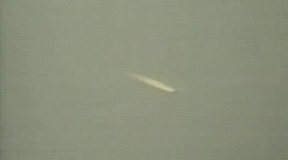
It was a big bang, a sonic boom accompanied by 10-15 smaller explosions. Time: about 14.50pm. All the dogs in the neighbourhood were barking.
I wish it landed in my backyard!


Big bang rattles Canterbury


Sep 12, 2006

The massive bang that rattled Christchurch just before 3pm on Tuesday appears to have been caused by a meteorite, but it is still not clear whether it bounced back into space or broke up and crashed to Earth.

The sonic boom was so powerful it shook buildings across the Canterbury region, and even registered on seismic drums used to monitor earthquakes.

Hundreds of people called police about the bang and several witnesses reported seeing the meteorite stream across the sky in Hinds. Seconds later it was spotted over Hanmer Springs in North Canterbury.

Many said the bang was so loud they thought it was a plane blowing up or an earthquake.

"We received about a hundred calls in a ten minute period - 25 percent of those were to the fire service, the rest were to police. Essentially all people could tell us was that they heard a loud bang," Inspector Mike Coulter says.

Police believe it was space junk re-entering the atmosphere, but there have been no reports of damage.

However meteorite hunters in the South Island may be in for a tough time searching for the remnants of the rock.

Professor John Baggeley, who operates a meteor radar for Canterbury University, says finding it would be like looking for a needle in a haystack.

He says people expecting to find a smouldering rock will be disappointed as it will be cold now that it has come to Earth.

A Canterbury astronomer says the meteor was probably travelling low and at great speed.

"When it hits the atmosphere it creates a ram phenomenon - that is the pressure of the atmosphere moving against it is what heats it up. Being so bright to be seen during the day and making a sound like a solar boom it would officially be called a bolite for astronomical purposes, which is an unusual event," associate professor at the Canterbury Astronomical Society, Euan Mason, says.

The last big meteor sighting in the South Island was in the Nelson region nearly two years ago.


Meteorite Wakes Up Christchurch
View larger imageA meteorite© Getty Images
12/09/2006IRNA massive bang which rattled Christchurch just before three o'clock this afternoon seems to have been caused by a meteorite.

Several witnesses report seeing the meteorite streak across the sky in Hinds, while Christchurch police say they believe it was space junk re-entering the atmosphere.

There have been no reports so far of damage, though some witnesses told our newsroom it shook their entire house and sent some of them running outside. Many Christchurch residents say the bang was so loud they thought it was a plane blowing up or an earthquake.

Resident superintendent Alan Gilmore at the Mount John Observatory in Christchurch says it seems like the kind of noise a meteorite would make.

He says any object from space which penetrates lower than about 60km above the ground then the sonic boom it causes would get down to the ground.

Professor Jack Baggeley of Canterbury University runs a meteor radar. He says these kind of things are fairly common, and one of them hits the land area of New Zealand about once a year.

Monday, September 11, 2006

September 11 Part 2


Neoconservative ideas to transform the U.S. into a "dominant force" do not come out of nowhere!
9/7/2006 9:30:00 AM GMT


This is a research article by Rudo de Ruijter, containing about a hundred facts leading ultimately to the U.S. war against Afghanistan. For each of them reliable sources are mentioned. It is a disturbing article, if you don’t know these facts yet.

For fair use, you may publish and/or forward this article.

Since 1993, in India, Enron had invested $ 2.9 billion for a power plant near Bombay. Originally it had counted on cheap supply of gas from Turkmenistan via the planned pipeline through Afghanistan. The power plant project had turned into a nightmare.

Enron had faced severe criticism over their contemptuous way of doing business. They had experienced severe opposition from the local population after hiring police officers to beat down protests of opponents. Charges had been filed against the company for human right violations. [39]

Last but not least, Enron’s deliveries to the regional electricity company were invoiced more than double the price of power from other suppliers. [51] Taking into account the real cost beared by the regional electricity company, Enron's price was even 700 percent higher. [52] The regional electricity company could not pay Enron's bills anymore. As retaliation, in January 2001, Enron had cut the power to 200 million people in Northern India, while demanding three times the normal price. [53] (Around the same time, Enron was provoking power cuts in California as well, to force higher prices. [54])

In 1997 Enron had started gas projects in Uzbekistan, for which George W. Bush had had personal contacts with the Uzbek ambassador.

As soon as the Bush administration was in place, vice president Cheney would reward Enron for their support during the elections. Enron's chairman, Kenneth Lay, had a wish list that was almost entirely included in Cheney's proposals for the new U.S. energy policy. [55] Cheney also intervened to help Enron collect a $64 million debt for its power plant near Bombay, during a meeting with Indian opposition leader Sonia Ghandi in Washington on June 27 2001. [56]

Enron - BinLaden
Enron had also connections with the construction firm BinLadin from Saudi Arabia, with which it constructed a power plant in the Gaza strip. (The power plant would not be finished before Enron's bankruptcy in December 2001.) [57]

Binladen - Carlyle
The wealthy bin Laden family is well known to the Bush family. Salem bin Laden supplied part of the money for George W. Bush’s first oil company, Arbusto, in 1978. [58] His father, George H.W. Bush, joined the Carlyle group after being US' president, [59] and developed relations with the BinLadin company. [60] He met the family in November 1998 and in January 2000. [61]

Bin Laden also invested in the Carlyle group. H.W. Bush still met with Shafig bin Laden, Osama's brother, on September 10, 2001, the day before the attacks, at the annual investor conference of the Carlyle Group. [62] Like Enron, Carlyle had grown tremendously.

In the early 1990s son Bush had been member of the board of a catering service company for airliners. [60] Carlyle had bought the catering company. Although the catering service crashed, Carlyle grew to be an important defence contractor in the U.S. [61] A bunch of well-known former politicians, including George W. Bush father, former UK Prime Minister John Major and former president of the Philippines Mister Ramos, are making a lot of money from the "war on terror". [59]

Osama
There is a terrible lot of information available about bin Laden's son, Osama. However, almost all of it comes from sources that cannot be verified, like comments by unknown people who would have known him or met him. Other stories are based on allegations by people who have big business interests in the "war on terrorism", like the Bush. One step further, you find the comments by officials "convinced" that everything that has been said about Osama is true.

On the other extremity, there is the image Osama draws of himself in an interview by CNN reporter Peter Arnett in 1997. According to this interview he is, first of all, a man of faith, who understands people who fight against the U.S. soldiers that came to steal the oil and who attacked the Islamic religion. He denies having organized any attacks against the U.S. himself. [63] (Many people will remember a videotape with “Osama's confession”, that he knew about the attacks of 9/11 in advance, which turned out to be a fake. [64])

Osama would become Bush's key excuse to invade Afghanistan. On September 17, 2001 Bush would declare Osama bin Laden was wanted "dead or alive". [65]

Why did Osama bin Laden stay in Afghanistan? Here too, different sources give different stories. He had already been in Afghanistan during the eighties, helping the mudjahedeen fight against the Soviet occupation (as did the U.S.). Back in Saudi Arabia in 1989, he had opposed the king's alliance with the U.S.

When his passport was confiscated, he at first fled back to Afghanistan, and then settled in Sudan in 1992, where all Muslims were welcome after a regime change the year before. In 1994, because of his support to fundamentalist Muslim movements, Saudi Arabia revoked his citizenship and froze his funds. [66]

After the assassination attempt against Egyptian president Mubarak in Ethiopia on June 26, 1995, Sudan was accused of being behind it. The relations between Egypt and Sudan deteriorated in the current of 1995.

At this point, let us jump to Afghanistan. In February 1996 things went wrong for the U.S. pipeline project in Afghanistan. President Rabbani of Afghanistan contracted the Argentinean BRIDAS instead of UNOCAL for the construction and exploitation of the gas pipeline. For the US, to get the pipeline project back in the hands of UNOCAL, Rabbani would have to disappear. But who could be accused if Rabbani were killed?

Back to Sudan. March 8, 1996, the U.S. suddenly asked Sudan to extradite Osama. It did not specify to which country. Since the Saudis took his passport and nationality away, Osama had few options. On May 18, 1996, he left Sudan and returned to Afghanistan. [67]

Years afterward, many people were still wondering why he had not been arrested at that occasion.

In Afghanistan, events would take a different turn. From March 20 to April 4, 1996, Taliban leaders had held a shura (meeting) and concluded with a jihad against Rabbani. [68] Osama arrived on May 18, but would not get involved. On September 27, the Taliban conquered Kabul and president Rabbani fled and joined the Northern alliance. At that moment things must have looked hopeful for the UNOCAL pipeline project. Unfortunately for them, in November 1996 BRIDAS signed a new contract with the Taliban.

Ultimately this would lead to the Taliban being evicted from power. Clinton would not attack Afghanistan after the U.S. embassy bombings in Africa in 1998, maybe thanks to Monica Lewinsky. Bush did, after "the catastrophic and catalysing events" of 9/11.

After having used the presence of Osama bin Laden in Afghanistan as his key excuse to invade the country, Bush would state, on March 13, 2002, he wasn't truly that concerned about Osama bin Laden. [69]

Karzai
After the US conquest of Afghanistan (or at least of its capital), UNOCAL's advisor Hamid Karzai would be appointed Chairman of the interim administration of Afghanistan. On June 16, 2002, even before there was an elected president, Karzai would sign an official agreement with Turkmenistan and Pakistan for a gas pipeline through Afghanistan. [70]

But even if the gas pipeline would come too late to transport Turkmen gas to Pakistan, Afghanistan remains an interesting booty. It has its own gigantic gas field south of the Turkmen field, near Mazar e Sharif. It has also several oil fields and coal. Furthermore, in the 1970s British geologists had already found 1600 locations with minerals.

Preparations for 9/11 and the invasion of Afghanistan:

Timing of the attacks
As noticed above, the timing for the attacks on the U.S. embassies in Africa helped Clinton, as it drew away the attention from his threatening conviction of perjury in the Monica Lewinsky affair, and focused on the common enemies: the terrorists.

The invasion of Afghanistan would have to wait for the next US president. Between 1998 and 2001 there was enough time to plan everything carefully. Below we will notice, that the attacks of 9/11 occurred at the very moment everything was in place. The only thing missing was a pretext to get support from Congress, from the U.S. population and the rest of the world…

Military preparations:

For the U.S. to invade Afghanistan at the other side of the world was a delicate operation. Step by step the U.S. had pushed its influence and control in the former Soviet republics. U.S. oil and gas related companies had started up activities in Azerbaijan, Kazakhstan, Uzbekistan and Turkmenistan and the U.S. military had gained influence in the region, challenging Russia and China in their backyards.

Already in 1997, north of Afghanistan, the US had considerably expanded its military "cooperation" with Kazakhstan, which forms the buffer with Russia. [71] In 1999, closer to Afghanistan, the US expanded its presence in Kyrgyzstan [72], and in Uzbekistan, one of Afghanistan's direct neighbours. [73] In April 14-15, 2000, Uzbek and US troops conducted joint military exercises. [74]

East of Afghanistan the US administration has strong ties with the Pakistani intelligence service. Its director, Lieutenant-General Mahmoud Ahmad, was with U.S. officials the week before and during the attacks of 9/11. [75] On the west side, F-15s were based in Saudi-Arabia, Kuwait and Turkey and the Fifth fleet was permanently based in the Persian Gulf. [76]

For the war in Afghanistan, huge transports of troops and material had to be organized well before the invasion. On November 7, 2000, the day all US-citizens were occupied with the election of their president, the UK announced its biggest military exercise since the Gulf War, operation Swift Sword (Saif Sareea in Arabic), involving 24,000 troops and a lot of heavy material. [77]

The exercise took place on the coast of Oman, a strategic location, since all oil tankers from the Persian Gulf region (Saudi-Arabia, the United Arabic Emirates, Qatar, Quait, Iraq and Iran) have to cross the Gulf of Oman. Here the UK maintains a War Material Storage. [78] The exercice had been scheduled from September 15 until the end of October 2001, [79] The UK would start moving troops and material to Oman in August 2001.[80] The UK participated in the invasion. [81]

From October 8 until the end of October, 2001 another military operation was planned in Egypt: NATO Operation Bright Star. It was the world's largest exercise including more than 11 Nations, and more than 70,000 troops (among which 23,000 from the U.S.) participating. [82]

Among several other "coincidental" military moves towards Afghanistan, we notice that on July 23, 2001, the aircraft carrier Carl Vinson was sent out from Bremerton (on U.S. West coast) to the Arabian Sea. It arrived just in time to launch the first air strikes on Afghanistan on October 7, 2001. [83]

Diplomatic preparations:

On the diplomatic front, to lower the risk of upsetting China, on June 19 2001, Bush had proposed to attend the APEC summit in Shang Hai and was expected to meet president Zemir between October 15 and October 21 2001. [84] & [85] (Bush's meeting with presidents Zemir and Putin took place on October 20, 2001) [86]

Besides, in 2001 China was completing its bilateral agreements with all 37 WTO members to become a full WTO-member. China wanted to become member since many years. China's bilateral agreement with Mexico would be the last and this would complete China's membership. [87] In July 2001 Bush would polish his relations with Mexico, "lobbying" against US unfair import restrictions on Mexican trucks. [88]

This was probably not only to get the Mexicans in the right mood to sign with China, but also because Mexico would be a member of the UN Security Council in 2002 and 2003. China reached its bilateral agreement with Mexico and became a WTO member on September 13, 2001. [89]

Bush's unmanned systems:

In the summer of 1999, a number of US embassies on the African continent were closed for the weekend because of suspicious people hanging around. [16] A few days later Clinton had issued its order prohibiting commercial transactions with the Taliban. [18] A few months later George W. Bush presented his ideas of defence "on the troubled frontiers of technology and terror."

He said, "In the air, we must be able to strike from across the world with pinpoint accuracy - with long-range aircraft and perhaps with unmanned systems." [19]

In September 1999 Bush still said "perhaps". He was still considering. This was at a time when the market for unmanned aerial vehicles (UAV's) for both military as well as civil aviation was rapidly developing. [90] By 2001 there were more than 60 types of UAVs world wide, from small models to big planes. [91]

At the time of Bush's speech in 1999, the U.S. was developing the Global Hawk [92], a military UAV with a wing span comparable to a Boeing 737, which had made its first flight from Edwards Air Force Base, CA on 28 February 1998. [93] After Bush became president, on April 23, 2001 the Global Hawk made a historical first unmanned test flight to Australia. [94]

9/11
Not all of the material about 9/11 has been released to the public. Some of the reliable evidence has been confiscated by the CIA. [95] Statements of officials often turned out to be contradictory. And, in particular about possible advanced knowledge, the White House has confiscated dozens of documents from the 9/11 Commission. [96] It doesn't make truth finding easier.

The official version of the events on 9/11 involves a very high number of coincidences that facilitated the "success" of the attacks.

A nationwide military exercise, Global Guardian, originally planned for November 2001, is in full swing, creating confusion between exercises and real-world events. [97]
A large-scale military exercise, Vigilant Guardian, is taking place and involves all of NORAD, that normally sends fighter jets after civil airplanes several times a week, when flight control operators report incidences. [97]
The Vigilant Guardian exercise simulates an air attack on the United States. [97]
NORAD is also running a planned real-world operation named Operation Northern Vigilance, for which many NORAD fighters are located in Alaska and Canada. [98]
Operation Northern Vigilance also creates false blips on radar screens at least until the second plane crashes into the World Trade Centre. [99]
In Washington a planned National Reconnaissance Office exercise involves a scenario of an airplane as a flying weapon. [97]
The Chairman of the Joint Chiefs of Staff is flying across the Atlantic on the way to Europe. [97]
The Federal Emergency Management Agency Director is at a conference in Montana. [97]
FAA hijack coordinator, who has to contact the National Military Command Centre in case of hijacks, is in Puerto Rico and cannot be reached. [97]
All of the FBI's anti-terrorist and top special operations agents are, together with the members of the CIA's anti-terrorist task force, on a training exercise in Monterey, California. [97]
For the day of 9/11, the commander of the National Military Command Centre had requested to be replaced by someone without experience. [97]
For FAA's new National Operations Manager it is the first day on the job. [98]
The hijackers can board without trouble, since the official no-fly list is only used for international flights and, curiously, not for domestic flights. [22] & [23]
Informed a few minutes after the start of the first hijack (Flight 11), American Airlines top management decide to "keep it quiet". [97]
Boston flight controllers do not follow normal procedures and waste time by contacting various military bases, instead of NORAD. [97]
After NORAD is finally informed, two F-15s will remain on the ground and only take off when Flight 11 already crashes into the WTC. [97]
For various reasons F-16s will only arrive on the scene after the last plane has crashed. [97] & [99]
A decision is taken to ground not only civil airplanes, but also all military planes. [99]
The presumed hijacker pilot of flight 77 was not able to fly a Cessna without difficulty in August, but succeeded to spiral down a Boeing 757 and hit the Pentagon a few meters above the ground on September 11. [100]
The President doesn't give any orders responding to the attack until just before the last plane crashes. [97]
Above I only mentioned those coincidences that facilitated the success of the attacks. If I were to build a story on such series of coincidences, no one would believe me. Well, I would not either. Keeping the things in their context, it makes more sense to look at them as facts, and not as coincidences.

All released details show that the attacks of 9/11 were carried out with military precision. However, the hijackers on the planes would have been improvised pilots without the extraordinary skills needed to fly in the way that has been reported. [101] & [102]

In addition, they would not have been intelligent enough to foresee the reactions triggered by their actions. Apparently they had so little political awareness, that they had not heard about the neoconservatives waiting for such a "catastrophic and catalysing event" to speed up U.S.' conquests.

The success of the plan relied on a lot of advanced knowledge of the situation that day, like the confusion offered by planned military exercises and the scenarios played by them, like the confusion offered by fake radar blibs, like traffic controllers lacking of primary radar images in specific areas, like the absence of several experienced officers in the command chains responding to the hijacks, like the absence of armed jet fighters to frustrate their plans.

All this seems more likely to be the work of a more influential and well trained organization, an organization willing to provide the justification for the neoconservatives' conquest plans, with Afghanistan as the first target.

It does not seem likely to me, that such an organization would let the success of its operation depend on the improvised skills of the hijackers. It makes more sense to suppose the hijackers were not in control. (In spite of an overheard phrase in the cockpit of the fourth plane, having been translated as "Pull it down" and by officials interpreted as "Crash the plane" [102]) It seems more likely the operation was conducted on the “troubled frontier of technology and terror”, and that technology had taken over the controls.

Transponders
The two types of planes used, the Boeing 757 and 767, can be controlled remotely. Robert Ayling, a former boss of British Airways, suggested in the Financial Times a few days after 9/11, that those aircraft can be commandeered from the ground and controlled remotely in the event of a hijack. [13] On 9/11 the remote control would have been in the hands of the wrong people.

If we look closer to the remote control scenario, we notice that if the published details about the transponders are right:

- 1- the transponder of the second 767 is turned off shortly after the first 767 crashes.

- 2- the transponder of the second 757 is turned off shortly after the first 757 crashes.

So, it looks as if one remote pilot handled the two 767s one after the other, and another remote pilot handled the two 757s one after the other. ([104] 9/11 Commission Report, P.32, 8:47 & 9:41)

It has also been reported that a C-130 military cargo plane was tailing flight 77 when it crashed into the Pentagon. The same C-130 was behind flight 93 when it crashed. Did the plane play a role? Or was it just a coincidental tourist, flying around while all other planes had been ordered to land? [101], [105], [106]

The hijackers hijacked?

Although the official story expects us to believe the hijackers wanted to fly into the WTC and the Pentagon, the released pieces of cockpit conversations offer no indications to support this theory. Although mountains of stories and counter-stories have been published about the hijackers, I did not find a single verifiable element.

If the hijackers were to support some Arabic or Islamic cause, they would probably have been in a stronger position if they had returned to airports with four planes and hundreds of U.S. citizens in their might. They could have negotiated the release of political prisoners. They could have demanded a retreat of U.S. forces from Saudi Arabia. They could have pleaded any cause they were after.

Did the hijackers really have in mind to strike the WTC and the Pentagon or were they overruled by the organization that had "contracted" them? Will we find out? According to the official story, all radio contact and overhearing of cockpit conversations stopped before the planes made their final approach to the WTC and the Pentagon. If the hijackers were to create the biggest possible spectacle, wouldn't they have shouted a last accusation against the U.S.? Or a last glorious prayer to Allah? Or were they surprised and in panic when they flew into the buildings?

Conclusion
The Afghan pipelines are only one step in U.S. political moves to take over the influence in the oil and gas rich former Soviet republics. Consuming 25 percent of the world oil consumption, their imperialism is first of all about energy. Today the U.S. already relies for over 60 percent on foreign oil, a percentage that is quickly increasing. The neoconservative ideas to transform the U.S. into a "dominant force" do not come out of nowhere.

The thought that they needed a "catastrophic and catalysing event" was not just motivated by the personal financial benefits several of them get from the war industries. It was also a sign of panic of a nation facing drying up oil wells and preparing itself to conquer foreign oil wells until the last drip is gone.

See Part I:

“Pipelines to 9/11”: The Struggle to control oil on the east side of the Caspian Sea


NOTES:
[51] http://www.atimes.com/reports/CA13Ai01.html#top5

[52] http://www.alternet.org/story/12525/

[53] http://www.atimes.com/reports/CA13Ai01.html

[54] http://news.bbc.co.uk/1/hi/business/1972574.stm

[55] http://www.thenation.com/doc/20020415/nichols

[56] http://www.guardian.co.uk/enron/story/0,,636530,00.html

[57] http://www.cooperativeresearch.org/timeline.jsp?timeline=complete_911_timeline&startpos=300#a0699powerplant

[58] http://www.cbc.ca/fifth/conspiracytheories/saudi.html

[59] http://www.hereinreality.com/carlyle.html

[60] http://www.guardian.co.uk/wtccrash/story/0,1300,583869,00.html

[61] http://www.cooperativeresearch.org/entity.jsp?id=1521846767-479

[62] http://complete911timeline.org/timeline.jsp?timeline=complete_911_timeline&day_of_9/11=dayOf911

[63] http://www.anusha.com/osamaint.htm

[64] http://welfarestate.com/wtc/faketape/

[65] http://www.telegraph.co.uk/news/main.jhtml?xml=/news/2001/09/18/wbush18.xml

[66] http://www.pbs.org/wgbh/pages/frontline/shows/binladen/etc/cron.html

[67] http://www.cooperativeresearch.org/context.jsp?item=a0396sudansquabble

[68] http://www.worldpress.org/specials/pp/taliban_timeline.htm

[69] http://www.truthout.org/docs_04/printer_101504W.shtml

[70] http://www.pakistaneconomist.com/issue2002/issue23/f&m.htm

[71] http://www.stimson.org/rd-table/ctr-kaz.htm

[72] http://www.defenselink.mil/transcripts/2002/t04282002_t0427jpc.html

[73] http://www.cdi.org/russia/johnson/5491-7.cfm

[74] http://www.rferl.org/featuresarticle/2005/09/383c3d03-2526-446e-943d-f81dfddbdc68.html

[75] http://www.atimes.com/atimes/Front_Page/FD08Aa01.html

[76] http://www.eias.org/publications/bulletin/2001/eboctnov01.pdf

[77] http://www.wsws.org/articles/2001/oct2001/oman-o09.shtml

[78] http://www.globalsecurity.org/military/facility/thumrait.htm

[79] http://news.bbc.co.uk/1/hi/uk/1012044.stm

[80] http://wsws.org/articles/2001/oct2001/oman-o09.shtml

[81] http://www.guardian.co.uk/waronterror/story/0,1361,581416,00.html

[82] http://www.globalsecurity.org/military/ops/bright-star.htm

[83] http://en.wikipedia.org/wiki/USS_Carl_Vinson_(CVN-70)

[84] http://transcripts.cnn.com/2001/WORLD/asiapcf/east/06/19/china.russia/index.html

[85] http://www.china.org.cn/english/12585.htm

[86] http://www.worldpress.org/europe/0302express.htm

[87] http://www.fas.org/sgp/crs/row/IB91121.pdf

[88] http://telaviv.usembassy.gov/publish/peace/archives/2001/august/0801e.html

[89] http://www.fas.org/sgp/crs/row/IB91121.pdf

[90] http://www.marketresearch.com/product/print/default.asp?g=1&productid=144390

[91] http://www.armada.ch/01-5/cgdrones.pdf

[92] http://www.fas.org/irp/program/collect/global_hawk.htm

[93] http://www.fas.org/irp/program/collect/global_hawk.htm

[94] http://www.spacedaily.com/news/uav-01d.html

[95] http://web.archive.org/web/20010921200613/www.washtimes.com/national/20010921-90259475.htm

[96] http://www.washingtonpost.com/ac2/wp-dyn?pagename=article&contentId=A30240-2004Feb10¬Found=true

[97] http://complete911timeline.org/timeline.jsp?timeline=complete_911_timeline&day_of_9/11=dayOf911

[98] http://www.cooperativeresearch.org/entity.jsp?id=1521846767-1683

[99] http://complete911timeline.org/timeline.jsp?day_of_9/11=dayOf911&timeline=complete_911_timeline&startpos=100

[100] http://www.whatreallyhappened.com/hanjour.html

[101] http://complete911timeline.org/timeline.jsp?timeline=complete_911_timeline&day_of_9/11=dayOf911&startpos=200

[102] http://complete911timeline.org/timeline.jsp?day_of_9/11=dayOf911&timeline=complete_911_timeline&startpos=300

[103] http://www.economist.com/science/displayStory.cfm?Story_ID=787987

[104] http://www.9-11commission.gov/report/911Report.pdf

[105] http://www.cooperativeresearch.org/entity.jsp?id=1521846767-2034

[106] http://news.minnesota.publicradio.org/features/2004/05/31_catlinb_airguardmuseum/


Rudo de Ruijter
Independent researcher
Olivier van Noortstraat 13
6991 BG Rheden
Netherlands
rudoderuijter@wanadoo.nl

September 11


“Pipelines to 9/11”: The Struggle to control oil on the east side of the Caspian Sea
8/30/2006 6:00:00 PM GMT


This is a research article by Rudo de Ruijter, containing about a hundred facts leading ultimately to the U.S. war against Afghanistan. For each of them reliable sources are mentioned. It is a disturbing article, if you don’t know these facts yet.

For fair use, you may publish and/or forward this article.

Short content:

This article is about backgrounds of the U.S. war against Afghanistan. It is about oil, gas and pipelines around the Caspian Sea. To transport oil and gas from the east side of the Caspian Sea, pipelines had been planned through Afghanistan. Because a U.S. company, UNOCAL, failed to control the Afghan route, the war was prepared. When the military was ready to strike, the "terrorists" of 9/11 gave Bush the pretext to start this war and obtain support from Congress, the U.S. population and the rest of the world.

Contents:
 Introduction
 Timeline 1989 – 2000
 Neo-conservative ideas
 Wealthy actors and influences
 Preparations for 9/11 and the invasion of Afghanistan
 9/11
 Conclusion


 Introduction

Our politicians have shaped the idea many people have about our world. They have divided our world into good and bad. Of course, they are always the good guys and the ones they accuse are the bad guys. Simple, isn't it?

However, if we stick to the facts, and throw out all the information that comes from unverifiable sources, our world looks very different. This research is not meant to offend anyone. If you are pleased with the "official" version of our history, don’t read any further.

Bush said the attacks of 9/11 were the reason to invade Afghanistan. [1]
This article shows that the war was the logical result of an unsuccessful struggle, by he U.S., to build and control pipelines through Afganistan, and that preparations for this war took place before 9/11.

In 2000 the neoconservatives said they needed some catastrophic and catalysing event.

This article shows how this event may have taken place on September 11, 2001.

The 1993 attack

The attacks on the World Trade Centre and the Pentagon on September 11, 2001 eclipse an earlier attack on the World Trade Centre in 1993. On January 20 1993, William (Bill) Clinton had become President. A month later, on February 26, an "immense blast happened at 12:18 local time in the Secret Service's section of the car park underneath and between what are New York's tallest buildings." [2]

BBC published the words of an eyewitness: "It felt like an airplane hit the building." Apparently the explosion was intended to bring both WTC towers down. The New York Times found out that the FBI was involved in the attacks. The FBI would have infiltrated a group of "terrorists", would have known about their intentions and for some unknown reason let it happen. [3] Six people died and a hundred were injured. [2]

 Timeline 1989 - 2000

In this chapter I will present a timeline of Afghan events. I will also mention events related to terrorism, which will become U.S. final pretext for war.

Immediately after the attacks on September 11, 2001, U.S. officials accused Osama bin Laden. Since the man would reside in Afghanistan, it provided a pretext for George W. Bush to attack and invade Afghanistan.

Let's have a closer look at the situation prior to 9/11. As promised by Soviet president Mikhail Gorbachev, the USSR had withdrawn its last soldiers from Afghanistan on February 15, 1989. It was the end of ten years of war. It was also the last war of the Soviet Union.

A few months later, on November 9, 1989, the Berlin wall fell. The Iron Curtain broke down. The people living on the other side of the curtain, of whom our leaders had always pretended they were dangerous and ferocious, turned out to be as friendly as us.

With the concept of the Cold War our leaders had divided our world and maintained fear in our minds for over forty years. This terror, fabricated by our own governments, was finally over.

Pipeline projects through Afghanistan


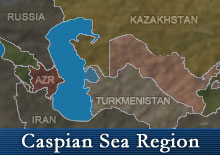
On December 25, 1991, the Soviet flag was lowered from the Kremlin for the last time. [4] The former Soviet republics become independent. Among them were the countries around the Caspian Sea, all rich in oil and gas. [MAP: http://worldatlas.com/webimage/countrys/as.htm ]

Before, the oil and gas went through pipelines to their soviet neighbours, or were exported via Russia to Europe. Now each country could sell its own oil and gas and explore new markets. Buyers showed up from everywhere.

In the beginning, the new leaders still had no experience with the world oil business. One of the first deals of Turkmenistan was to auction an oil well for as little as $100,000. [5] U.S. companies showed up, too.

The biggest challenge was to get the Caspian oil and gas to the world markets. The problem? The region is land-locked. If you trust neither Russia on the North side of the Caspian Sea, nor Iran on the South side, you need to build new pipelines. [MAP: http://www.treemedia.com/cfrlibrary/library/policy/bremmermap.html ]

Today, from the West side of the Caspian Sea, oil is pumped through several pipelines towards the Black Sea and the Mediterranean Sea from where it can be shipped.

Big business on the East side of the Caspian Sea is still limited. To unlock oil and gas from this side, pipelines have to be built through Afghanistan. Here, since the early nineties, two pipelines - one for gas and one for oil - have been in project. [MAP: http://www.treemedia.com/cfrlibrary/library/energy/greatgamemaps.html#map2 ]

The oil pipe should go South to the Indian Ocean, ending at the port of Gwadar in Pakistan. The gas pipe would turn East to Multan in the middle of Pakistan. From Pakistan an extension is planned to Bombay (Mumbai, India), where a U.S. company with close ties with father and son Bush, Enron, has built a power plant. [6]

Contracts for pipelines are not just multi-billion dollar projects to build them. The main contractor generally also buys and sells the oil or gas going through them. With contracts he disposes of it, determines how much the supplier gets in return, and what fee is paid to crossed countries. He determines who gets it, how much, when, to what price and in which currency it has to be paid.

In fact, he determines a lot in the economical developments of both the selling and the buying countries. With Turkmenistan eager to sell its gas, Pakistan eager to buy it and Enron in India hoping to see it arrive as soon as possible, the pipelines through Afghanistan are of high interest.

However, in 2001, the work in Afghanistan had not yet started. Since the withdrawal of the Soviets in 1989, unrest was still in the country.

The Taliban: From ally to "terrorist"

The unrest in Afghanistan that blocked the business is worth mentioning. In 1992, the pro-Russian President Mohammad Najibullah was ousted. In 1993, Burhanuddin Rabbani became President, supported by the Tajik minority of the population.

In 1994, the Pashtun, forming half of the population, challenged Rabbani. Because the pipelines have to cross mainly Pashtun territory, their movement, the Taliban, had support from the U.S. and Pakistan.

In March 1995, two companies, BRIDAS from Argentina and UNOCAL from the U.S., both claimed to have obtained the contracts from the seller of the gas (Turkmenistan) and the buyer (Pakistan). At that moment no deal had yet been signed with the Afghan authorities.

In October 1995, President Niyazov of Turkmenistan signed an official agreement with UNOCAL, but in February 1996, President Rabbani of Afghanistan signed an agreement with BRIDAS for the main section of 875 miles through Afghanistan. [7]

UNOCAL's chances seemed compromised. Fortunately for UNOCAL, the Taliban wanted to oust president Rabbani. In September 1996, they took Jalabad, Kandahar, and then Kabul. President Rabbani fled to join the Northern Alliance.

UNOCAL sighed with relief. It expressed support for the Taliban takeover, saying it makes the pipeline project easier. (Unocal later said it was misquoted.)

Would BRIDAS now have lost the game? No. In November 1996, BRIDAS signed an agreement with the Taliban and Gen. Dostum to build the pipeline. Unfortunately, except from Pakistan and Saudi-Arabia, the Taliban government didn't obtain international recognition.

In April 1997, because work on the pipeline still had not started, the Taliban announced it would award the contract to whomever starts first. However, UNOCAL claimed there must be peace first.

In July 1997, Turkmenistan and Pakistan accepted a new delay and signed a new contract with UNOCAL, saying they had to start the work within a year and a half.

In December 1997, UNOCAL tried to become good friends with the Taliban and invited a delegation to their head office in Sugarland, Texas, where they received a VIP treatment while staying in the best hotels. [8]

In Afghanistan, civil war went on. With no internationally recognized legal representative of Afghanistan, the pipeline project seemed to be deadlocked. [9]

U.S.-bombs on Afghanistan after U.S. embassies are attacked in Africa

On February 4, 1998 and May 30, 1998, very heavy earthquakes shook the North East of Afghanistan. They attracted a lot of international attention and many groups of relief workers came into the North-East of Afghanistan to help.

According to U.S. accusations, this was the moment that somewhere in this same region of Afghanistan a certain Osama bin Laden would have been planning the bombings of two U.S. embassies in Africa, one in Nairobi (Kenya), and one in Dar es Salaam (Tanzania).

The bombings had a high impact in the press. 258 people were killed and some 5,000 injured. The bombings occurred on August 7, 1998, apparently for no specific reason. [10]

Apparently only President Clinton benefited from it. In the U.S., the Monica Lewinsky affair had come to a height. The press and the public were excited and angry. Clinton had stated under oath, that he had had no sexual relations with Monica Lewinsky. Proof had come out he had. Clinton was close to the point of being convicted of perjury.

The bombings of the embassies drew people's attention to the drama in Africa. Finally, on August 17, Clinton came away with the perjury charge by arguing that oral sex was not a sexual relation. [11]

A few days later, August 21, 1998, the U.S. military threw bombs on Kandahar and other targets in Afghanistan. Only afterwards Clinton explained to the journalists that this was because of Osama bin Laden, who was supposed to be behind the bombings of the U.S.' embassies in Africa. [12]

Unlike George W. Bush in 2001, Clinton did not invade Afghanistan. An invasion would have given hope to UNOCAL to see the Afghan deadlock broken, but with the Lewinsky affair still being argued, Clinton did not have enough credit for such a war.

On August 28, 1998, UNSC resolution 1193 blamed the Taliban for the problems in Afghanistan. [13]

On November 5, 1998, a U.S. Grand Jury indicted Osama Bin Laden. (Not for the bombings of the embassies in Africa, but essentially for considering the U.S. as his enemy.) [14] & [15]

UNOCAL withdraws

In December 1998 UNOCAL withdrew from the pipeline consortium and, at least for the outside world, the pipeline project seemed halted. [8]

However, in January, 1999, Turkmenistan's foreign minister visited Pakistan, saying the pipeline project was still alive. In February, BRIDAS had talks with leaders in Turkmenistan, Pakistan and Russia.

In March, Turkmenistan's Foreign Minister Sheikh Muradov met with Taliban leader Mullah Omar in Kandahar to discuss the pipeline. In April, Pakistan, Turkmenistan, and the Taliban signed an agreement to revive the pipeline project. In May, a Taliban delegation signed an agreement with Turkmenistan to buy gas and electricity. [8]

"Terror" warning

On June 25, 1999, the U.S. State Department announced: "As some of our embassies in Africa have been under surveillance by suspicious individuals, we are taking the precaution of temporarily closing our embassies in Gambia, Togo, Madagascar, Liberia, Namibia and Senegal from June 24 through the 27th of June - that is Sunday." [16]

The speaker seemed to have no idea where these countries are, considering the strange order of announcing them. Besides, the only African countries, where incidents like attacks and hostage taking have been reported that year, are Sierra Leone, Nigeria, Burundi and Ethiopia. None of these countries is on the list. [17]

On July 4, 1999, President Clinton issued an executive order prohibiting commercial transactions with the Taliban. [18]

Back to Cold War budgets

On September 23, 1999, Presidential candidate George W. Bush exposed his views on the U.S. military. He complained that since the end of the Cold War the Defence budget had fallen 40 percent and that the army had never been in such a bad shape since Pearl Harbor.

"As President, I will order an immediate review of our overseas deployments - in dozens of countries. ... My second goal is to build America's defences on the troubled frontiers of technology and 'terror'."

Among his views of arms: "In the air, we must be able to strike from across the world with pinpoint accuracy - with long-range aircraft and perhaps with unmanned systems." [19]

On October 15, 1999, things were getting more serious for the Taliban. UN resolution 1267 against the Taliban threatened an aircraft ban and fund freezing, if Osama Bin Laden was not handed over before November 14, 1999. [20] & [2]

On November 11, 1999, during a press conference, the Taliban minister of Foreign Affairs said Osama bin Laden and the Taliban were unable to organize attacks like those on the embassies in Africa and condemned these actions.

In 2000 the U.S. had Presidential elections. It was time to postpone delicate decisions.

On April 2, 2000, Richard Clarke, who had been appointed counter-terrorist coordinator a few months before the attacks against the embassies in Africa (on May 22), predicted: "They will come after our weakness, our Achilles heel, which is largely here in the United States." [21]

Curious No-Fly list

On April 21, 2000, something remarkable happened. As an antiterrorist measure, the U.S. Congress announced a single unified "terrorist" watch list, the TID (or Terrorist Identities Database), into which all international "terrorist" related data available to the U..S government - mainly the TIPOFF no-fly list - would be stored in a single repository. In airports, this list is used to prevent suspected people from going on board and from entering the U.S. [22]

However, the same day that Congress announced the unified TID list, the FAA created a new and separate domestic no-fly list and put only six names on it. Two weeks before 9/11, the list was expanded with six other names, making it a total list of 12 names.

Thanks to this separate list the hijackers of 9/11, using domestic flights, and not listed among the 12 names, could board the planes without difficulties. On August 23, 2001, two names, later published as being two of the hijackers, had been added to the official TID-list, which counted 60,000 suspects, but was discarded for domestic flights. [23]

 Neo-conservative ideas

This second chapter starts with September 2000, when the neo-conservatives present their views. Their ideas will spread through the White House Administration with the election of George W. Bush. Even before he enters the White House, two imperialistic wars are on the agenda: Iraq and Afghanistan. Afghanistan gets the priority.

In September, 2000, the neoconservative think tank Project for a New American Century (PNAC) published their imperialistic views for the U.S. [24] In the document, they warned that the process of transforming the U.S. into "tomorrow's dominant force" would likely be a long one in the absence of "some catastrophic and catalysing event - like a new Pearl Harbor". [25]

After 9/11, to those who would not yet have understood the benefits of the events at Pearl Harbor in 1941, Bush would explain: "The four years that followed transformed the American way of war" and "even more importantly, an American President and his successors shaped a world beyond a war." And, to make sure that people understood that 9/11 was just like Pearl Harbor, he would add "September 11th, 2001 - three months and a long time ago - set another dividing line in our lives and in the life of our nation." [27]

Many PNAC members would become members of the Bush administration. Those members include Dick Cheney, Donald Rumsfeld, Paul Wolfowitz, I. Lewis "Scooter" Libby, and Richard Perle. [26]

On October 12, 2000, three weeks before the Presidential elections, the U.S. population was shortly reminded of the "terrorist" threat in the world. The U.S. Navy destroyer USS Cole in the Yemeni port of Aden was rammed with an inflatable raft with explosives and was damaged. Published detail: it looked as if the raft was coming to help the warship to moor to a buoy. [28] Message: you can trust nobody.


On November 7, 2000 the elections took place. George W. Bush or Al Gore would become President. The counting gave an extremely close result. The results in the State of Florida became decisive, but the counting was and remains far from clear.

The opponents fought in many different courts until December 13. It turned out that in Florida, 180,000 votes had been thrown out of the counting. This way Bush led by less than 600 votes. Partial recounts resulted in much lower estimates. Finally, all recounts could not be executed within the time limit set by the intervening Supreme Court. This is how Bush won the elections. [29]

Dictator

A few days later, on December 18, speaking at the Capitol, Bush joked about his new relationship with some congressional leaders: "If this were a dictatorship, it would be a heck of a lot easier....just so long as I'm the dictator." [30]

Just a slip of the tongue? Not really. In July 1998, about governing Texas, he said already: "A dictatorship would be a lot easier." [31] And on July 26, 2001, speaking once again about his struggles with Congress he repeated: "a dictatorship would be a heck of a lot easier." [32]

Well, for the ambitious plans of the neoconservatives, the U.S. Congress was a major hurdle to clear. The budget of the military had shrunk by 40 percent after the Cold War and with the wars they had in mind they would need a lot more money.

How would they get the budget they wanted? If the U.S. would be attacked, there would be no problem. They would receive all the budget, political support and public sympathy they needed. But, as written in their document, without a new Pearl Harbor things would go slowly. [25]

When Bush started his presidency, many neoconservatives considered Iraq as the first target to hit. In their document of September 2000 they had named Iraq as a "potential rival" of the U.S. [24]

First Target Iraq?

Iraq has the world's second largest oil reserves. The country was exhausted. It had tried to conquer Iran from 1980 to 1988, had invaded Kuwait in 1990, had been defeated by Operation Desert Storm in 1991, and a subsequent UN embargo had brought the Iraqi economy to a standstill and the population to the edge of starvation.

Since 1996, the Oil For Food program of the UN had brought some relief for the Iraqi people. The country had been disarmed. Extensive weapon inspections had concluded the country formed no threat anymore. Well, at least, not military. In 2000, Saddam had still found a trick to hit the main pillar of U.S. hegemony, the dollar. He started to sell his oil in Euros, instead of Dollars. [ http://www.raisethehammer.org/index.asp?id=252 , see: Dollar Hegemony]

Afghanistan back on the agenda

However, not even a week after George W. Bush had been declared winner of the elections, Afghanistan was back on the international agenda. UNSC resolution 1333 of December 19, 2000, imposed the sanctions the UN had promised more than a year before, if the Taliban would not hand over Osama bin Laden before November 14, 1999 (aircraft ban and funds freezing). [33]

Afghanistan in the Caspian context

Geopolitically, Afghanistan had become a more urgent target. Since 1996, the U.S. had experienced severe setbacks in their ambition to control gas and oil on the East side of the Caspian Sea and was loosing influence. The lack of control over Afghanistan was leading to severe complications.

As mentioned earlier, the problems had started in February 1996, when Afghan President Rabbani signed a contract with UNOCAL's competitor BRIDAS for the construction of the gas pipeline through Afghanistan, between Turkmenistan and Pakistan. [8] In March 1996, the U.S. tried to block this deal, putting pressure on Pakistan and telling them they should grant exclusive rights to UNOCAL. This resulted in a diplomatic clash with the Pakistani government. [8]

Still, in the same month, Pakistan officially agreed to allow a proposed Iranian pipeline to run over Pakistani territory on its way to India, thus enabling Iranian gas sale to India. The gas would come from Iran's giant South Pars Field in the Persian Gulf and cross the South of Iran
from West to East through a pipeline still to be constructed. [34]

Meanwhile, in February 1996, Turkmenistan had showed it did not want to depend exclusively on the delayed Afghan pipeline project and had signed a contract with Turkey to supply Turkmen gas via a pipeline to be constructed along the North coast of Iran. If necessary, Turkey would be able to absorb all the Turkmen gas. [34]

Iranian-Libyan Sanctions act

With these two aforementioned Iranian pipelines, the Afghan pipelines would become more or less useless. To prevent the construction of the Iranian pipelines the US Congress passed the Iranian-Libyan Sanctions act, [35] threatening anyone who would help Iran to construct them, and forbid transactions with Iran of $4 million or higher. That was on June 18, 1996.

Nevertheless on August 30, 1996 Turkey signed a 20-year deal to buy gas from Iran. [34] & [36] The Turkish President would be punished for his Islamic solidarity by a military coup forcing him to resign. That was on June 18, 1997. [37]

With the Iranian-Libyan Sanctions act in place, another U.S. company, Enron, expanded its activities in the region. In Uzbekistan, Enron had obtained a contract for 11 gas fields. In April 1997, George W. Bush himself had intervened to help Enron obtain Uzbeki contracts. [38] Enron counted on a U.S. controlled pipeline through Afghanistan to export a part of the Uzbek gas to its power plant in India. [39]

The U.S. threatened sanctions and blocked the completion of the Turkish pipeline connection to Iran, therefor the gas deliveries from Iran to Turkey were delayed several years. In August 2000, Iran and Turkey agreed the gas deliveries would start on July 30, 2001, which would be a few days before the expiration date of the Iranian-Libyan Sanctions act. [40]

Despite the Iranian-Libyan Sanctions act, the construction of the northern pipeline had started on the East side of Iran. With Iranian funding, Iran and Turkmenistan opened an international pipeline connection of 200 km by the end of 1997. [36]

Subsea shortcut avoiding Iran

To frustrate further development of the Iranian pipeline to Turkey, the U.S. came up with an idea for an alternative route from Turkmenistan, crossing the Caspian Sea to Azerbaijan and from there to Turkey. Enron did the study for this project. [39]

By that time it appeared as if the Afghan pipeline project would be abandoned. In June 1998, Enron withdrew from its Uzbek gas projects [41] and in December UNOCAL withdrew from its consortium for the Afghan pipeline. [8]

The U.S. threats did not prevent big companies like Shell and Total from signing deals with Iran for exploration of oil and gas. [42] Nevertheless, Shell withdrew from its pipeline project in Northern Iran. [43]

The undersea pipeline crossing the Caspian Sea now existed on the drawing table, but in the waters the five surrounding countries (Azerbaijan, Russia, Kazakhstan, Turkmenistan, and Iran) had not yet come to an agreement about each other's borders, and thus about the ownership of oil fields. As long as this would last, according to an existing agreement of 1940, Russia and Iran would have to agree with the pipeline project first. And they did not. [44]

In 2000, the Turkmen president had blamed the U.S. for the delay in the trans-Caspian pipeline and had resumed gas deliveries to Russia. [45] That May, President Putin had even come to Turkmenistan to offer extended deals for several years. [9] Meanwhile, in Kazakhstan, the oil from the Tengiz field (world's sixth largest oil field) was going to be pumped via Russia to the Black Sea. [46]

 Wealthy actors and influences

George W. Bush sworn in

On January 20, 2001, George W. Bush was sworn in as President of the U.S. He is the son of Ex-President George H.W. Bush. The family is from Texas and has close ties with the oil and energy related companies there. These companies have contributed a lot to Bush's election campaign.

Companies contributing to election campaigns is a common phenomenon in the U.S. The financial support for a candidate's campaign determines how much marketing they can afford and, ultimately, their chances to win an election. Of course, when these companies invest a lot of money, they expect something in return when their candidate wins, such as nominations within the administration, influence for big business orders or favourable laws and amendments. [47]

Enron

Enron had been the biggest contributor of the Bush 2000 election campaign. [48] In fact, the company had generously contributed to both father and son's election campaigns since 1985. Enron's chairman, Kenneth Lay, had close personal contacts with the Bushes. He had even been a sleeping guest at the White House. [49] During these years, Enron had expanded from a regional energy supplier to a giant multinational company, and the seventh biggest in the U.S.

Although loaded with debts caused by its giant investments abroad, Enron always showed splendid results. How? In 1997 the Securities and Exchange Commission had exempted Enron from the Investment Company Act of 1940 that prohibits U.S. companies from leaving debt from overseas projects off the books. [47] At the same time Andy Fastow, Enron's senior vice president of finance, had started his "creative" financing. [50]

To be continued...

Refrences:

[1] http://www.september11news.com/DailyTimeline.htm

[2] http://news.bbc.co.uk/onthisday/hi/dates/stories/february
/26/newsid_2516000/2516469.stm

[3] http://www.whatreallyhappened.com/wtcbomb.html

[4] http://news.bbc.co.uk/hi/english/static/in_depth/europe/2001/
collapse_of_ussr/timelines/late1991.stm

[5] http://www.washingtonpost.com/wp-srv/inatl/europe/caspian100598.htm

[6] http://www.hrw.org/reports/1999/enron/enron2-4.htm

[7] http://www.hri.org/news/balkans/rferl/1999/99-08-03.rferl.html

[8] http://www.worldpress.org/specials/pp/pipeline_timeline.htm

[9] http://www.gasandoil.com/goc/company/cnc02739.htm

[10] http://news.bbc.co.uk/onthisday/hi/dates/stories/august/7
/newsid_3131000/3131709.stm

[11] http://www.washingtonpost.com/wp-srv/politics/special/clinton/stories/clinton081898.htm

[12] http://news.bbc.co.uk/1/hi/world/africa/155252.stm

[13] http://www.un.org/Docs/scres/1998/scres98.htm

[14] http://www.fas.org/irp/news/1998/11/98110602_nlt.html

[15] http://www.fas.org/irp/news/1998/11/indict2.pdf

[16] http://www.fas.org/irp/news/1999/06/990625db.htm

[17] http://www.fas.org/irp/threat/terror_99/appa.html

[18] http://www.fas.org/irp/offdocs/eo/eo-13129.htm

[19] http://www.citadel.edu/pao/addresses/pres_bush.html

[20] http://www.un.int/usa/sres1267.htm

[21] http://web.archive.org/web/20000919212253/http://www.library.
cornell.edu/colldev/mideast/terclrk.htm

[22] http://www.fas.org/irp/crs/RL32366.pdf

[23] http://www.cooperativeresearch.org/entity.jsp?id=1521846767-2057

[24] http://www.newamericancentury.org/RebuildingAmericasDefenses.pdf

[25] http://politics.guardian.co.uk/iraq/comment/0,12956,1036687,00.html

[26] http://www.sourcewatch.org/index.php?title=Bush_administration:_Project_for_the_New_American_Century

[27] http://www.whitehouse.gov/news/releases/2001/12/20011211-6.html

[28] http://news.bbc.co.uk/onthisday/hi/dates/stories/october/12/newsid_
4252000/4252400.stm

[29] http://news.bbc.co.uk/onthisday/hi/dates/stories/november/8/newsid_
3674000/3674036.stm

[30] http://www.pbs.org/newshour/bb/politics/july-dec00/trans_12-18.htm

[31] http://www.governing.com/archive/1998/jul/bush.txt

[32] http://seattlepi.nwsource.com/national/32902_bush27.shtml

[33] http://daccessdds.un.org/doc/UNDOC/GEN/N00/806/62/PDF/N0080662.
pdf?OpenElement

[34] http://www.eia.doe.gov/emeu/cabs/chrn1996.html

[35] http://www.fas.org/irp/congress/1996_cr/h960618b.htm

[36] http://www.hartford-hwp.com/archives/53/052.html

[37] http://select.nytimes.com/gst/abstract.html?res=F00C12FF3F5A0C7A8DDDAF0894DF494D81&n=Top%2fReference%2fTimes%20Topics%2fPeople%2fE%2fErbakan%2c%20Necmettin

[38] http://www.publicintegrity.org/report.aspx?aid=104&sid=300

[39] http://www.monitor.net/monitor/0202a/enrontimeline.html

[40] http://www.gasandoil.com/goc/news/ntc03653.htm

[41] http://www.cooperativeresearch.org/entity.jsp?id=1521846767-525

[42] http://www.farsinet.com/news/nov99wk2.html#shell

[43] http://www.iranian.com/Times/Dec98b/Khorramabad/624front.html

[44] http://www.pinr.com/report.php?ac=view_report&report_id=499&language_id=1

[45] http://www.first-exchange.com/FSU/azer/news/news031800.asp

[46] http://www.eia.doe.gov/emeu/cabs/chrn2000.html#FEB00

[47] http://www.publicintegrity.org/report.aspx?aid=104

[48] http://www.whatreallyhappened.com/SilkRoad.html

[49] http://www.thenation.com/blogs/capitalgames?pid=21

[50] http://www.cfo.com/article.cfm/2989389


Rudo de Ruijter
Independent researcher
Olivier van Noortstraat 13
6991 BG Rheden
Netherlands
rudoderuijter@wanadoo.nl

Sunday, September 10, 2006

The Fire Alarm Shout "FIRE!"

It was about 0200am. 09/09/2006
The light on control panel at the office indicated there was a FIRE in the building, somewhre in the hotel or the car park. I ran outside to the fire control panel outside the building. Nope, no flashing to indicate any.
So I have to find the hard way, check every floor.
First, I check the kitchens, where fire would be most likeky. While I was at the 11th floor staffroom, the general fire alarm goes!
Now its full evacuation of the building, no less!
So I had to make way to top floor, 26th and start checking every room. 2 caucasian idiots acted as if nothing happened, standing around in their room. I had to call tell them please evacuate, there might be real fire.
Those stupid Asian tourists make way downstairs with their luggage! Hey this is fire evacuation, life is more important, not your belongings!

Up at the 24th, 25th and 26th, somebody turned the fire hydrant ON!
The fire alarm detector which was going was at the stairway on 21st.

The firemen arrived soon after. They deduced the cause of the alarm.

Some numbskull turned on the fire hydrant at 26, 25 and 24 floors, this result in water flooding the stairway. The dripping water made way down to 21st floor and wet the fire detector at the stairway, causing the alarm to go off!

We get wet carpet on the 26th floor, and frayed nerves.

Some stupid idiot hotel guest! Why would he/she turn on the fire hydrant?

Downstairs, an Asian tour group leader only care about compensation for his group's loss sleep and us not wearing the fire warden jacket! AND HE DIDNT WANT TO GO TO THE ASSEMBLY AREA!
Look! there might have been a fire, is that what you worry about?

Some people are damn selfish!

Wednesday, September 06, 2006

in malaysiakini

Emailed this to malaysiakini alst night, and wallah, its in the front page today!

http://www.malaysiakini.com/letters/56339

What I like, and don’t like, about the Budget
Noor Yahaya Hamzah
Sep 5, 06 4:00pm


When I read the commentaries in major newspapers about the 2007 Budget, I thought, "Wow, what a fiscally imprudent expansionary budget!"

Billions of ringgit on development, tax cut for corporate citizens and surely the good times are coming back for contractors. Do we really have that much money under the pillow to spend? Maybe we really have.

Let’s talk the plus side first.

I like the abolition of examination fees. Fees for government services is a form of user pay tax. Taxing students who cannot exercise their voice by voting is like taking sweets off babies, they can’t complain. By all means, charge fees to users of government services to people who earns money and derived benefits from these services.

I like seeing more money allocated to healthcare. That is a good investment, after all it’s government duty is to provide this service to its citizens.

I like that money is being allocated for better public transport. If the country is to be competitive and efficient, public transport has to be good and efficient as well. It may not make profit, but it saves on resources and wastage of man hours for people who are stuck in traffic congestion.

I like the notion that money is being allocated for agribusiness, as this will benefit the nation soon in the form of more abundant food and agriproducts and cheaper food. Perhaps reducing our food import bills and lower food inflation.

Bonus for civil servants? I don’t have any problem with that, but why don’t we just increase their pay, especially the lower level. The practice of giving bonus in Asian countries could amplify the boom and bust scenario in the economy. no doubt it is inflationary during good times especially at the end of the year when bonus is given. People also wait until end for year before tendering their resignation, just so that they can get their bonus.

Reduction of corporate tax would encourage more investments and reduce tax evasion. That’s is good for competitiveness sake. If it’s affordable, I would suggest corporate tax be reduce further to 20% to match Ireland and Hong Kong. When it’s that low, tax evasion in the form of under invoicing would not be worthwhile. Low corporate tax rate encourage sustainable economic growth.

On the negative side, I don’t see any effort to help the low paid workers. MTUC even said some plantation workers get only RM325 a month. It’s time to draft a law that stipulate minimum liveable wage at least RM1,200 a month. It’s the duty of the government to spread the wealth of the country, not just let it concentrate to the rich and powerful.

I don’t see any safety net welfare payment for the poor, old and disabled. This is supposedly an Islamic Hadhari country, where wealth is supposedly abundant. But is the wealth being shared around? Are the poor being taken care of?

It’s pointless having a capital that can be seen from space, a huge international airport and world tallest building if some of the poor in the society is not taken care of and sleep under the bridge.

A Boxer Dog


I finished work at 7am, went home and go straight to sleep. But then I was awaken by screaming Adam and Emily. My wife telling the children to shut up. I was too lazy to get up and find out what was going on.
So I went back to sleep.
Later in the day my wife told me that a Boxer dog came to our yard and panting at the children, Emily and Adam. Thats why they were screaming. The dog was just being friendly and got close to the children. Adam ran inside the house and slam the door, leaving Emily outside to face the dog.
My wife told the children to stop screaming so as not to get the dog agitated.
She went to the grandma to tell her to ring the SPCA, and a short time later the SPCA informed her that the owner of the dog has reported their lost Boxer, from Barnes Rd in Redwood.
That far! Well about a mile away.
The owner came and took away their lost dog. Yeah the dog was excited alright to see the master.
One happy ending.
And I slept away through all that.